Episode Transcript
[00:00:00] Speaker A: Foreign.
Hi, everybody. Welcome along to another episode of the Little Flock. My name is Brendan.
[00:00:17] Speaker B: And I'm Katie.
[00:00:19] Speaker A: And as you can see, things have changed.
We've got a funny story to tell you about the changes.
[00:00:24] Speaker B: You share the story, are we?
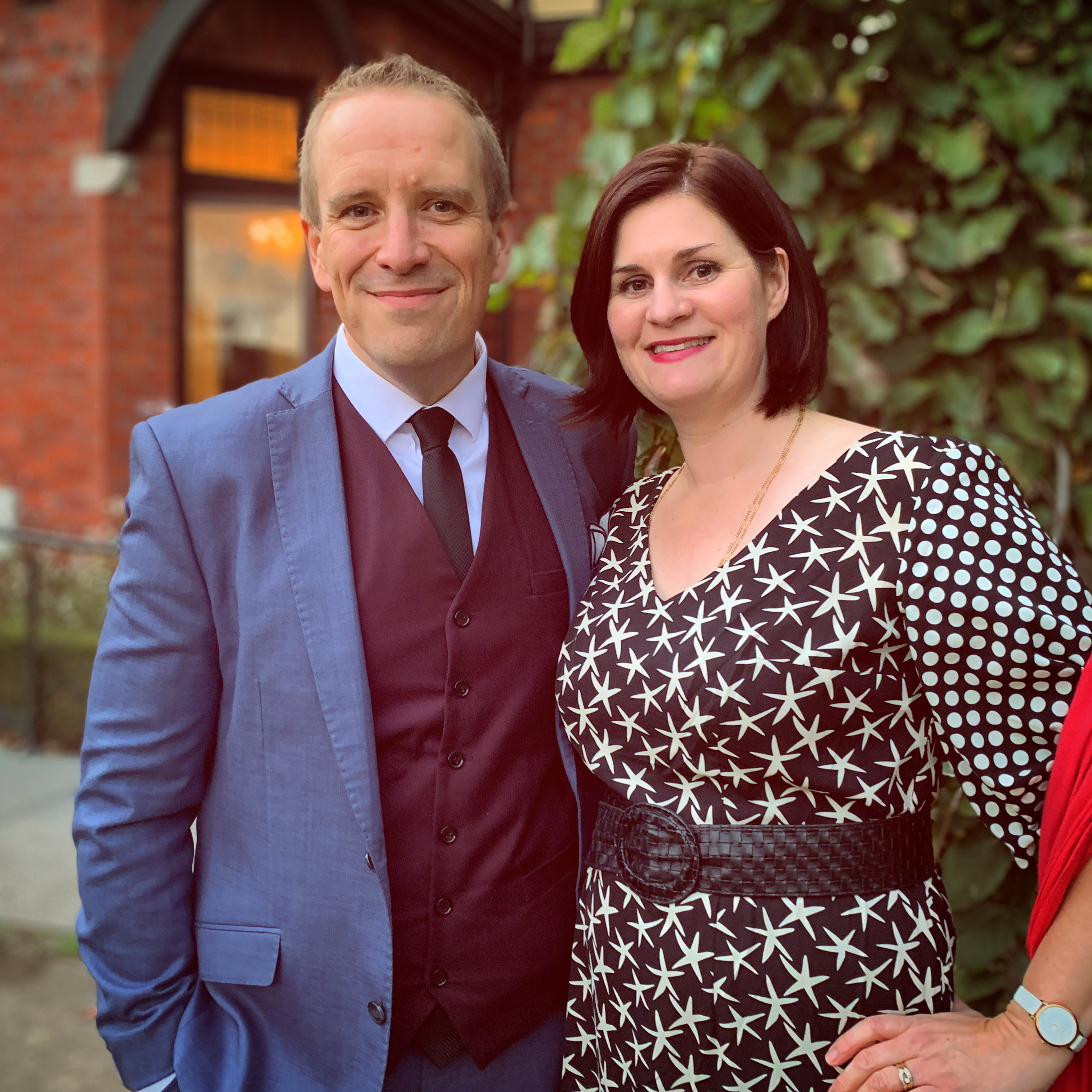
[00:00:25] Speaker A: In just a second, we're now. We've upgraded to the world of video. So, first time ever seeing our lovely faces. If you haven't seen our faces before, probably most of you know who we are, though, so not a major change. But we are doing this because the algorithm loves the video, Katie.
[00:00:42] Speaker B: Oh, okay. And life must be driven by the algorithm, Brendan.
[00:00:45] Speaker A: We worship the algorithm. Oh, great algorithm, tell us thy bidding. No. So welcome back to another episode of the Little Flock. It's great to have you with us. Funny story. Should we tell the story?
[00:00:56] Speaker B: Yeah.
[00:00:57] Speaker A: So, basically, last week we were prepped to record this particular episode.
[00:01:02] Speaker B: Keyword record.
[00:01:04] Speaker A: Yeah.
And poor old Katie. What happened was, being the husband of the year that I am, I just. It just slipped my mind, for whatever reason.
Maybe it was like Freudian Trying to get away with it. I don't know. Whatever reason, I just.
I forgot to mention, we were. We were now filming episodes, and poor old Katie arrives, sits down, and then she realizes, hey, why is there a camera here?
And needless to say, we had a lovely marital conversation. It was a great example of communication. And the recording of this episode was delayed for discernment purposes, so. Yeah. But basically, it sort of seems appropriate because it's a bit of a Lenten sacrifice for you, isn't it? You're not a fan of being on camera.
[00:01:49] Speaker B: It won't be just a Lenten sacrifice,
[00:01:51] Speaker A: just an ongoing sacrifice. I don't know why. Yeah. But, hey, some people just.
[00:01:56] Speaker B: You like your face on camera.
[00:01:57] Speaker A: Get that. Well, I don't like my face on camera, but I'm just used to it now. It's just, you know, and other people, like. Get that camera out of my face.
Speaking of Lent, how is Lent going for you, Katie?
[00:02:06] Speaker B: Well, it was all right till last Wednesday.
How's it going for you?
[00:02:13] Speaker A: Sorry, I'm just removing things from my side there. Hold on.
How's Lent? Is excellent, actually.
[00:02:19] Speaker B: It's a Lent.
[00:02:21] Speaker A: Well, it is a. It's a good Lent.
[00:02:23] Speaker B: Oh, you didn't hear my pun.
[00:02:24] Speaker A: Oh, no, Just hit me with it. Yeah, no, it was excellent. Roll back.
Hit me with it.
[00:02:29] Speaker B: Roll it back on the air.
Excellent. Oh, you took three times.
[00:02:35] Speaker A: I get it.
[00:02:35] Speaker B: A joke.
[00:02:36] Speaker A: I see what you're saying, dad.
[00:02:37] Speaker B: Joke brain was not on.
[00:02:38] Speaker A: I've just realised that that blind over there is open. Hopefully there's not too much light flooding in from the side, but it's not too sunny today, so it wouldn't be
[00:02:45] Speaker B: a problem if we weren't filming. So.
[00:02:47] Speaker A: Yeah.
Oh, I just removed that from the side again. My ribs are a bit sore, actually, so she must be hitting me in my peep or something.
That's for making me be on camera. That's for making me be on camera.
[00:02:59] Speaker B: Bringing you up.
[00:03:00] Speaker A: Yeah. So Lent. How is Lent going? Well, for me, I'll answer. Cause you threw the question back at me. Sure did. And then I'll ask you again. For me, I found this to be quite a.
How would I describe it? It's almost like a very peaceful and fulfilled Lent. Does that make sense?
I don't know. Like, I'm sort of. I feel like it's taken me all this time in my life to figure out there's a big period of my life where I wasn't in the Catholic Church. So I was just parading around like a, you know, a wild man. Not to.
[00:03:31] Speaker B: Every day was Easter.
[00:03:31] Speaker A: Yeah, every day was Easter. There was no sort of con. There was no balance in the liturgical year or anything. It's one of the things I really appreciate about, you know, the Catholic faith is that balance of the highs and lows. It's not just one nub middle. And.
And so we go down to the valley of Lent. So there were periods where I wasn't even in the valley. And then when I get back into Catholicism, the Holy Spirit leads me back and I'm doing Lent again.
It took me a long time to really sort of to crack that code, if you like that. I thought it was sort of like just, oh, it's supposed to hurt and be austere.
[00:04:05] Speaker B: Yeah.
[00:04:05] Speaker A: Do you know.
And this year, I think I feel like I've realized it's actually.
That's not correct.
[00:04:13] Speaker B: Yeah. It's not meant to be as painful as possible.
[00:04:15] Speaker A: Yeah. Yeah. And I've known that here. But I. For whatever reason. And I think I'll tell you why I think that is. For this year, I've kind of tailored some of my spiritual disciplines and my fastings. I've been a bit more intentional about tailoring them to me, not just saying, okay, well, what do other people do?
They give up lots of meals, or they fast from X, Y, and Z, or they.
They have cold showers during Lent as a little sacrifice each day. You know, things like that. It was like, I'm actually just going to tailor to me what Suits and I found that really fruitful. And the other part of his prayer, I've had a bit more, I think this year of a considered. It's been intentional in the past, but this year I think it was a bit more considered.
[00:05:01] Speaker B: Well, there's absolutely no point in doing the disciplines without the prayer.
[00:05:04] Speaker A: Yeah.
[00:05:05] Speaker B: If they don't lead you back to prayer and back to God and back to love of God, then there's no point. You're like on a holy diet.
[00:05:11] Speaker A: Yeah.
[00:05:12] Speaker B: So many times previously. But you're, you know, you're.
You're on a self improvement, you know, self help, self care path. Even if it's hard, you know, it's more about me than it is about God.
[00:05:26] Speaker A: Yeah, yeah, then that's such a good point. A holy diet.
So effectively you're just using Lent, kind of depriving yourself of something.
[00:05:36] Speaker B: Yeah.
[00:05:37] Speaker A: How.
What's your Lent been like then?
[00:05:39] Speaker B: Yeah, it's been good. I've done another year where I've done the. Joined a woman's group. Yeah, we have.
[00:05:45] Speaker A: And it's a. Specifically a Lenten woman's group.
[00:05:47] Speaker B: Yes. Yeah.
[00:05:48] Speaker A: So they just. It's like the Avengers. They just come together for 100.
[00:05:51] Speaker B: That's right. That's right. We're all the ones that can make it, you know, to avenge.
We should have called it that, actually.
[00:05:57] Speaker A: No, better avenge.
Take that. No food.
[00:06:04] Speaker B: That's been good. I found that fruitful. Last year again, I had a much more like disciplined Lent, I think, or full of disciplines because it was the first year we'd done this particular program as a group.
I think we were all a bit like, yeah. And it is really hard to get away from that ticking the boxes thing, you know, like, oh, I did that today. I didn't do that today. You know, like. And to some extent, I think that is a part of not just Lent, but like a Christian life is like, I did that or I didn't do that.
[00:06:32] Speaker A: Yeah.
[00:06:32] Speaker B: You know, when you look back, I'm
[00:06:33] Speaker A: a good Christian cuz I tick, tick.
[00:06:34] Speaker B: Yeah, yeah, yeah, yeah. We don't want to wear our factories long. Shall we say we just keep our FL to ourselves?
[00:06:42] Speaker A: Look at me.
[00:06:43] Speaker B: Oh, and oh Lord, you no sackcloth and ashes.
Yeah.
[00:06:46] Speaker A: And I'll.
[00:06:46] Speaker B: Look at me.
[00:06:48] Speaker A: I'll. Give me a mirror, I'll confirm my holiness.
Yeah.
[00:06:52] Speaker B: But yeah, the grip's really good. I think like, partly because it keeps you accountable, but it also keeps you like, understanding that. I think my. The thing I'm learning this Lent is that Lent is not Just for each individual person. And yet it is.
Can you unpack that Catholic Both. And it came from, like, I read Bishop Eric Varden's Ash Wednesday homily, which was really good. He put it on his blog.
[00:07:15] Speaker A: And I was, if you're not reading
[00:07:17] Speaker B: him or listening to his books, get on that. He's a great guy.
[00:07:19] Speaker A: I'll talk about that in a second to remind him.
[00:07:20] Speaker B: I'm sure I have.
And the last paragraph of that homily was basically like, God's working out his redemption and he needs your help. And it just brought home to me, like, the sacrifice of Christ and salvation isn't just for people who believe in Jesus. Like, it's for everyone.
Like, I've really been thinking about that this year. Like, yeah, it's for the. And he says in there, we need to pray for the people who are forgotten and the people who forget, you know, and possibly I would add the people who've never known. You know, like, that's kind of a theme.
[00:07:53] Speaker A: Actually, his book. I'll talk about that more in a second. But his book is on Christian remembrance. Well, it's one of his boxes. And each chapter is basically a beautiful spiritual reflection. Each chapter he takes, basically, I think, just from memory, all of them. He takes an incident in the Scriptures and then ties it back to remembrance, like Lot's wife. And a lot of it is really the whole sense of Christian remembrance for ourselves, but also for those who have forgotten. So that's a. Yeah. Interesting. That theme is coming.
[00:08:22] Speaker B: Yeah. And I think that's why the group is so good, because it helps me to remember, you know, and to kind of have a window into other people's Lent and, like, and what's hard for other people and what's hard for me. And. Yeah, we just kind of help each other.
[00:08:37] Speaker A: That's awesome. So that group dynamic. Lent is for everyone.
[00:08:40] Speaker B: Yeah.
[00:08:41] Speaker A: And you're all. You're helping each other out.
[00:08:43] Speaker B: Yeah.
[00:08:43] Speaker A: Yeah. That's cool. Cause I've never. I'd always thought, oh, Lent, you white knuckle.
[00:08:48] Speaker B: You battle away yourself and don't tell anybody that it's hard. And don't, you know, nobody should know you're having a Lent. Really. That's kind of what you get. Eh.
[00:08:55] Speaker A: And you're on your own. It's a solo pursuit. But it's really not.
[00:08:58] Speaker B: No.
[00:08:59] Speaker A: And that's the whole point of the liturgical calendar, too, is that the community goes on that journey together. Like, if everyone was just doing their own scheduling. Oh, well, I think I'll have I'm
[00:09:09] Speaker B: ready for Easter now.
[00:09:09] Speaker A: Yeah. Fasting over Christmas, you know, everyone. We would. We wouldn't. We'd all just be autonomous. We wouldn't be a community.
[00:09:14] Speaker B: The first, I think the first week of Lent, on the Friday after Ash Wednesday, I was congratulating myself on it having been a really good first ten days of Lent. And then I was like, wait, it's only been two days.
[00:09:24] Speaker A: It's only been two days.
[00:09:25] Speaker B: I've done so well.
[00:09:26] Speaker A: Oh, man, this is amazing. Yeah, I'm ready for Easter next weekend. No, no, you're not.
[00:09:31] Speaker B: Bring it forward. Katie's already done 10 days. Oh, yeah.
[00:09:34] Speaker A: It feels like 40 days and 40 nights has just gone by in two days now. Why you've reminded me about Bishop Eric Varden.
So something I did this year was I've got his book on Christian remembrance.
I've got his other one as well, but his book on Christian remembrance in particular. And I deliberately. I've got the audible version, and I decided to take the audible version and I would listen to it each night. So I won't go into, you know, you're not supposed to expose all your fasts and, you know, oh, look at him. But one of my fasts has. Creates a bit more space in the evenings. And so I put my earbuds and I sit down and I just listen to a chapter. They're really well written, actually. So in the sense that 30 to 40 minutes per chapter, it's like having a mini spiritual retreat every night.
And it's so beautiful. And it's just been. Man, it's been so good. It's just.
It's like going to bed after having a spiritual reflection. I'd highly recommend it. It's very different to even just reading the text. The narrator for the audible version is very good. It's some audible books, the narrators, they can kill it for you. This one's not like that. It is so good and it draws you in. It's very beautiful. And it is. I said each chapter is like a spiritual reflection. I would actually say my.
I mean, I don't want to overstate things, but I really do feel like I am reading another Pope Benedict or Pope John Paul II in the younger years, reading this guy. It's that deep and profound. There's something.
There is something very profound about God's calling on this man's life.
[00:11:11] Speaker B: Because he's a convert, right?
[00:11:12] Speaker A: He's a convert. He came to the. From a agnostic, basically background atheistic baptized to Lutheran. But the parents weren't practicing. He listens to Augustof Mahler symphony when he was 16.
And he's overcome with. And this is the moment God speaks to him.
And then he's in the Protestant communion for a while. I think Anglicans is really where he was. And then he ends up going to visit, I think. Was it Trappist monks in somewhere in England? It was in England. And someone warned him beforehand. They said, if you go and visit these guys, your life is. And it was. And he's now one of them.
But it's not just that he's younger than I am.
[00:11:50] Speaker B: Oh, my goodness.
[00:11:51] Speaker A: Well, yeah, there's a lot of people these days, but he's younger than I am. But man, he writes. Like I said, it is like reading. I wish God had graced me with just his intellect. He's learned so many languages, he's read so widely.
And the real deep stuff as well.
It's profound. There's very few people today, I think, in his age group who are that well read, who are that spiritually astute and who can actually articulate it well. And it is. I'm serious.
I mean, I would not be surprised, and it won't be in my lifetime, but if in future decades or centuries, this man came to be known as a doctor of the Church. I'm serious. His writings are that profound. So. And I hope I'm not overstating it, but. So listening to him each night has been like, wow, what a Lent it's been. It's just sort of. It's almost like resetting the clock at the end of a day, and then the next day you're like, yeah, back into it again.
One other thing too. I'm just sort of looking at our notes. Everyone is wondering. This is the other thing about being on camera is you can't just sort of, you know, dilly dally and wander around the place. You've gotta be on your game.
Lent as a family. We've done that a little bit more this year, I think, haven't we? It's always been a family thing, but the kids are a bit older.
[00:13:10] Speaker B: Yeah, older. A bit more able to understand. And the older ones have all chosen their own sacrifices without us kind of being like, we really feel like Instagram, you know, needs to go this length.
[00:13:19] Speaker A: Yeah, yeah, yeah.
[00:13:20] Speaker B: Because they've kind of just made their own decision.
[00:13:22] Speaker A: A list of suggestions for you, my beloved daughter. No, we haven't. And I've been amazed. Like, one of them in particular, I won't say who it was and what what it was. But one of their choices, I was like, wow, that's.
That's really well thought out. They've. They've clearly sat down and prayerfully discerned for me personally, and this is what I did this year, too, and it's been such a great thing.
What do I need to really discipline spiritually in my life? Not what are other people doing. Yeah, yeah.
It's been a blessing. And we've done the Stations of the Cross on Friday together. We go to the. Our local parish has them. But if your parish doesn't, you're not a Catholic. Local Anglican church probably would be praying them. Other denominations might be too. And traditionally you pray them on a Friday and you just follow basically the way of the Cross and you stop and there's a prayer at each station and then a little reflection.
So, yeah, and we've been doing that as a family and that's been. That's our family prayer time on Fridays and it's been really cool, eh? So, yeah, family Lent.
And I think there's something too, about that. I've noticed anyway, this Lent is that in particular, like. And we've got to remember this prayer is different when you have kids. And so same is same with Lent. Right. We were talking to a group member earlier this year in January, they. A group of parents in a little small group at an event, and they asked us to come over and just. They wanted to ask questions. And one of the things that was a big deal was how do you find time to pray? And like, as a family, you've gotta remember you're a family, you're not single.
You know, St. Paul talks about all that time you got on your hands, which means, I think you can. You've just got space for that stuff a bit more in a bigger way. And you're not in a. You're not living a religious life, so you don't have an obligation to pray, you know, certain times. Certain times, all the day, every day. You know, you've got to. And so you've got to be. You've actually just got to be aware of that when your kids are younger in particular, right?
[00:15:15] Speaker B: Yeah, absolutely. Yeah. Don't beat yourself up.
[00:15:18] Speaker A: Yeah, I've noticed now that our kids are older, have you felt that it's different yet?
[00:15:22] Speaker B: To some extent. Although still, I mean, this morning I was trying to read the Gospel and Nathaniel was banging away on his laptop looking up things on macpac for his camp, and I was like, it's not helping.
[00:15:32] Speaker A: It was funny because you're sitting on one couch on the side of the lounge. I'm sitting on the other couch reading, asking Nathaniel's at the time.
[00:15:39] Speaker B: Nathaniel's like, mum, these waterproof pants are $300. I'm like.
[00:15:44] Speaker A: And I was like not be buying it. I tried my little.
But it didn't work. Didn't even work.
[00:15:49] Speaker B: It had to be very direct, especially in the morning.
[00:15:51] Speaker A: And it was, it was funny because he's quite excited about going on basic training camp and. And so he was just revisiting the paint again and we were like, that's lovely, son.
Yeah. And it's, it's kind of, it's interesting because I'm in that situation. I'm thinking it's kind of a balance. It's a tension like you, you know, unless you're going to get up at 4am and try and break yourself that one. Some people maybe just some people definitely do that. Some people made for that. Then you've just got to be. You gotta roll with it.
[00:16:18] Speaker B: Yeah.
[00:16:19] Speaker A: But yeah, I think for me it's
[00:16:21] Speaker B: always a comfort to remember all those people like you mentioned, people in religious life and to remember those communities that are up and praying and I know there's one particular order of nuns, I can't remember where it is, but they're. One of their parts of their charism is that they pray for mums in the night. So they get up and do a midnight, oh, beautiful prayer and they pray for mums that are up with babies or. Yeah. Which I think's pretty amazing. And they kind of unite themselves. Yeah, yeah.
[00:16:44] Speaker A: You got me a gift this year for Christmas which was really handy. I've got a quote from it. Cause it seemed relevant just to sort of wrap this little conversation up. Oh, by the way, I should say listeners and watchers that we are now, we are doing, not only are we following the algorithm with video, but we're also doing our best to make sure that these episodes stick to 30 minutes. Cause basically our listeners. Our listeners time the algorithm and the listeners will tell us what to do. And the listeners really sort of. They're not. That's narrow time poor. No, they're all like 30 minutes is a good bite sized piece. So we'll try and keep that to 30 minutes.
But you got me a book.
Brother Lawrence, who was a Carmelite monk in the 1600s. So this book was written what, 400. Over 400 years ago.
[00:17:27] Speaker B: Yeah.
[00:17:27] Speaker A: Or about 400 years ago. And it, it's as relevant as if it was written yesterday. Right?
[00:17:33] Speaker B: Yeah.
[00:17:33] Speaker A: And it's called the Practice of the Presence of God.
And you got me this as a Christmas gift and I devoured it in the January holiday break.
[00:17:42] Speaker B: I think you were a little bit like, eh. No, I was like that's probably Leo's favourite book.
[00:17:46] Speaker A: Oh no, no, no, I didn't. I wasn't like. I was like, oh cool.
Cause you got me another book as well. And I was like, oh man, I've got so many books on the go. And I was like, but I do want to read this one. So it was a really insightful gift actually.
And then when I read it, it was a couple of weeks after Christmas, I read it and I read it
[00:18:05] Speaker B: and pretty much it's not big, it's like that. It was so I haven't finished it yet to be fair. Haven't you? No, I haven't.
[00:18:11] Speaker A: Come on.
[00:18:11] Speaker B: I'm halfway through.
[00:18:14] Speaker A: Yeah. And there's a quote in that that seemed relevant particularly to. As a truck goes past, particularly to families. I thought this was relevant and not beating yourself up if you're sort of mums and dads or even in your own business. Maybe it's not family. Maybe you have other demands on your.
And it means that you can't. You just can't give as much in that moment because sometimes emergencies crop up, sickness, all that sort of stuff and we.
[00:18:38] Speaker B: Look, sometimes you're just really tired.
[00:18:40] Speaker A: Yeah, yeah.
[00:18:41] Speaker B: She's a mum. If you're up in the night with babies or whatever, you're just really tired.
[00:18:44] Speaker A: Yeah.
[00:18:45] Speaker B: And God sees that.
[00:18:46] Speaker A: Yeah, he knows that. And I think if we're communing with him in that. And that's the point of this quote where he says we ought not to be weary of doing little things for the love of God who regards not the greatness of the work that you do, obviously, but the love with which it is performed.
[00:19:02] Speaker B: Yeah. Beautiful.
[00:19:03] Speaker A: And I think that's important because that's about family life.
It's also about our prayer and that's something I've really realised is this year is it's not about trying to go for quantity, it's about quality.
In my prayer it's love of God and love of neighbour, whoever I'm praying for as well, maybe some intentions, but love of God as I contemplate him, it's not about man. I really have an awesome pre life because I do an hour.
[00:19:30] Speaker B: Yeah.
[00:19:30] Speaker A: No, if there's no love or very minimal love, you're only loving for 20 minutes of that, then you're only doing 20 minutes. Do you know what I mean?
[00:19:37] Speaker B: Yeah.
[00:19:38] Speaker A: So. Yeah. And it seemed relevant to families too.
[00:19:40] Speaker B: Yeah. No, it's great. Yeah, it's a good little book actually. It's just about taking like remembering God, remembering his presence, being aware of his presence, and kind of like even if you're in the middle of washing the dishes or something, that you come back and say, I know you're here, you know? Yeah, yeah.
That little moment of communion.
[00:20:00] Speaker A: Beautiful.
Okay, folks, so that new little visual stinger that you just watched there, normally you've only heard the music, haven't you? Now you get to see some graphics to go along with it. That's our moment of goodness, truth and beauty and our scripture reflection.
Should we start with our moment of goodness, truth and beauty or our scripture reflections? What would you like to do?
[00:20:33] Speaker B: You choose.
[00:20:33] Speaker A: Okay, shall we start with our scripture reflection then? What was your scripture reflection?
[00:20:38] Speaker B: It kind of comes back to what we've been talking about, actually.
It's from 1 John, chapter 3, verse 16.
The way we came to know love was that he laid down his life for us. So we ought to lay down our lives for our brothers.
If someone who has worldly means, sees a brother in need and refuses him compassion, how can the love of God remain in him?
Children, let us love not in word or speech, but in deed and truth.
[00:21:06] Speaker A: Wow.
[00:21:06] Speaker B: That's quite appropriate to how my length's been, you know.
[00:21:09] Speaker A: That's beautiful, eh? Yeah, yeah. John is good.
[00:21:13] Speaker B: He's a good one.
[00:21:14] Speaker A: Sure. Yeah, we like. One of the best. One of my favorites.
[00:21:17] Speaker B: But lots of him in the Bible is good.
[00:21:19] Speaker A: Yeah. No, the Johin writings have very. They're very profound, the gospels and the letters. Eh? There's something really important in there. Yeah. That's a constant theme about loving God is about following his commands.
[00:21:32] Speaker B: Yeah.
[00:21:32] Speaker A: And we sort of. We often forget that in the modern age it tends to be loving God. It's just feeling.
[00:21:38] Speaker B: Yeah, the feeling of love.
[00:21:39] Speaker A: Yeah. Sentimental about God.
No, it's not that. And then I guess in pre former ages, people just sort of perhaps probably tried to downplay the importance of the doing.
Christianity does involve both a love, a faith and a working.
It has to be. I mean, it's clear. It's in the gospels. It's just clear. So yeah, that's beautiful. And it kind of actually relates to my scripture reflection, which was from the Gospel of Luke.
And I remember a funny comedian. I like Luke.
Sorry, don't go Google that because you might not like the rest of the bit, but it's not safe for Work. Yeah. You're not safe for work. But for whatever reason, like, I've read this, heard this, and probably said this. Well, not a billion times, but a lot.
[00:22:27] Speaker B: I've told you a million times not to exaggerate.
[00:22:29] Speaker A: This is Jesus speaking. If anyone wants to be a follower of mine, let him renounce himself and take up his cross.
And. And, you know, yeah, sure. But for some reason, what really hit me was the next two words where he says, let him renounce himself and take up his cross every day. And I was reading that, that was a couple of weeks ago, and it just. It hit me like a hammer to the side of the head at the. Everyday.
[00:22:53] Speaker B: Every day. Yeah.
[00:22:54] Speaker A: I was like, oh, my gosh. Yeah, of course. And I like. I've known that, like, yeah, every day you take up your cross and you do it every day. And I've said it and I've even told other people. But it really hit me, for whatever reason, you know how sometimes just the epiphany and the ball drops in a bigger way.
And it was like, our Christian life is an everyday repeated. It's Groundhog Day of spiritual growth.
[00:23:18] Speaker B: Yeah.
[00:23:18] Speaker A: You don't just do one thing and then that'll see you right for 10 years or your life every day, you've got to keep picking it up again.
[00:23:27] Speaker B: Yeah.
[00:23:28] Speaker A: And it's also kind of a reminder to me of. And in Lent in particular, it is a cross.
It's not. Things are not comfortable that you have to pick up and call a cross. And it keeps happening.
[00:23:41] Speaker B: There's a drink water 182song where they say, you want to cross with a pillow and a hill with a view. And the end verse is, you'll get a cross with a pillow and a hell of a view. Oh, yeah.
[00:23:52] Speaker A: Good old Drink Water. Great band, man. Phil Joel, wasn't it? Phil Joel. Yeah, that was.
[00:23:57] Speaker B: Yeah. He went to the Newsboys with me.
[00:23:58] Speaker C: That one.
[00:23:59] Speaker A: Yeah. I love. We both loved Drink Water. That was another funny thing. We both loved the Angelus painting.
[00:24:05] Speaker B: Yeah.
[00:24:05] Speaker A: By Jean Francois Millay. And we did independently. We both loved that. To be fair, probably a lot of
[00:24:10] Speaker B: people love that they can be in our club.
[00:24:13] Speaker A: Yeah. They can join.
[00:24:13] Speaker B: We'll accept applications.
[00:24:15] Speaker A: But also Drink Water, the band Drink Water, we both independently. And I had a covers band that used to play one of their songs.
What was it? I want you to be a part of everything I do.
[00:24:27] Speaker B: Great song.
[00:24:27] Speaker A: Yeah. And that is so funny. But. Yeah. But that scripture just. Man, it was just. Honestly, it just really hit, like, a massive Weight this time again, every day.
[00:24:37] Speaker B: Yeah.
[00:24:38] Speaker A: And it was like. Yeah. And for some reason it clicked in such a way where I was like, it wasn't like, oh my gosh, every day it was like, ah, this is kind of liberating. Once I accept that, then I know now what's in front of me. If I don't accept that, I expect to wake up every day and my problems are gone because I dealt with them yesterday.
[00:24:59] Speaker B: I think also we have to pick up our cross every day. And some days it's harder than others. Right? Yeah, it's got pointier or heavier of a night or whatever.
But also I think back to the Psalms and I think his mercies are new every morning.
[00:25:10] Speaker A: Yeah.
[00:25:11] Speaker B: You know, like our cross is kind of new every morning, but also God's love and grace and mercy.
[00:25:16] Speaker A: Mercy for that cross carrying.
[00:25:18] Speaker B: Yeah, for the grit for what you need for that day.
[00:25:20] Speaker A: Right, yeah. And that's true because that the scriptures do tell us that you are given what you can handle. Christ doesn't give you things that you know that unless you actually are called to, that you're meant to. And so if you're something that's overwhelming, then probably that's not God. That's something else you need to figure out in your own life. That's probably out of order. But you're so that mercy is waiting for you every day for what God has called you to that day. Yeah, that's a good point.
Good point. So what about your moment of goodness? Truth or beauty? What's your one?
[00:25:51] Speaker B: Oh, we went to Auckland recently and ran into some old friends at church and that was just like. It's just really a stay with me.
[00:25:56] Speaker A: Like, that was lovely, wasn't it?
[00:25:58] Speaker B: The real.
[00:25:59] Speaker A: We had not seen them in what, a long time? Possibly at least 10.
[00:26:02] Speaker B: Yeah, yeah, probably.
[00:26:03] Speaker A: Yeah, Possibly longer.
[00:26:04] Speaker B: Yeah. And just that joy in seeing people that you knew and loved. Well, yeah. And that that connection's still there and like a real God friendship, you know?
[00:26:16] Speaker A: Yeah, yeah, it was, wasn't it? It was just. It's funny, it was like as if almost no time had passed. Except they've now got massive kids and we don't.
[00:26:24] Speaker B: Yeah, we've got massive kids, more of them.
[00:26:26] Speaker A: Kids be all grown up, you know, like. Yeah, yeah, that's so true. Yeah, that was a great moment. Yeah, yeah, it was really beautiful.
[00:26:32] Speaker B: But it made me think. It's nice to know what's reassuring. It's a blessing to know that, you know, there's still that connection even when you're not there all the time. Yeah, yeah.
[00:26:42] Speaker A: What was awesome, too, was it was kind of. We got to church, and it's an awkwardly sort of layout church. And because we arrived just as the opening hymn is starting, we got to go to the naughty seats, which are right up the front into the side.
[00:26:56] Speaker B: Yeah.
[00:26:56] Speaker A: So there's a set of pews facing side on. And everyone else is. Everyone else can see marching in with all your late people have arrived there. They were in the front row. So our friends. It was not on the late side. They're on the good side.
[00:27:10] Speaker B: Yeah. Yeah.
[00:27:10] Speaker A: But, yeah, that was. That was so beautiful.
[00:27:12] Speaker B: I thought you might have a. It might resonate with you after your 50th birthday party. The. The seeing the old friends.
[00:27:19] Speaker A: Yeah. Because for those who don't know, my 50th, we celebrated it. My 50th was at the end of last year, but we celebrated the birthday in January. And it was so good, so beautiful. Just seeing and looking, it's like looking over a life.
[00:27:31] Speaker B: Yeah. Snapshot of you.
[00:27:32] Speaker A: It's like, man. Yeah. That person's from that period. That person's from that period, man. It was a beautiful thing.
[00:27:39] Speaker B: I think that true and authentic friendship that comes from God doesn't just die. No, no.
[00:27:45] Speaker A: It's an enduring thing. Yeah. And a friend. It's good for brethren to dwell together. A friend. True friendship is a beautiful gift.
Yeah. Well, that's awesome. Well, yeah, that's a good moment. Mine is actually a video clip, so we're gonna watch this together now. It's short.
[00:27:59] Speaker B: Watching it with you for the first time.
[00:28:01] Speaker A: Yeah, you're watching it for the first time. I really love this. This spoke to me particularly as a man and as a dad, a father. It really spoke very powerful way. But it's Bob Odenkirk, the actor. Bob Odenkirk. If you know Breaking Bad, he was Saul Goodman, the lawyer. Breaking Bad is a phenomenally written series. Even if you don't like.
[00:28:19] Speaker B: Don't like drugs.
[00:28:19] Speaker A: The style of it. It was so well written. And Saul Goodman is the sort of. He's this gang lawyer, basically. And it's all good, man. That's so good. He changed his name. So Goodman, he's one of those kind of guys.
[00:28:29] Speaker B: Little bit of the Bob Law about that.
[00:28:31] Speaker A: Yeah, Bob. Bob Law. He was so good in that. And Bob Odenkirk is a very good actor. Sort of that comedic style of acting, and very droll. He was so good in it. They did a spin off, and in fact, it's called Better Call Saul, and it's about his journey into the law practice. It's equally well written, but this is Bob Odenkirk, the actor, and he's being asked a question by a guy in a. In a podcast. So let's just see if I can bring this up now. Who are you jealous of?
[00:28:59] Speaker C: Anybody who's still got little kids at home growing up.
There's no question I knew what I was doing when I had kids growing up.
[00:29:07] Speaker A: Yeah.
[00:29:07] Speaker C: I was being a dad. I mean, that was my job. And I didn't have to ask myself, what am I doing here? What am I doing? How can I be a part of this world? How can I be meaningful today? I didn't have to ask that question because the answer is, pick up everything between here and the door and make sure they get to school and have a laugh with them. You know, life was. I understood my purpose. Best answer? You know who you are when you leave here. You absolutely know who you are. Yeah, you're a dad.
[00:29:38] Speaker A: That was beautiful, eh? Like, that was just phenomenal. Like, it really spoke to me. It was so spot on. Like, often you hear very superficial things from actors and celebrities.
[00:29:48] Speaker B: There's been a bit more of that lately. Like Catherine o' Hara when there was that pub that went round because she
[00:29:53] Speaker A: died a month and a half, two months.
[00:29:55] Speaker B: What was your best. What was your favourite role? Or your best?
[00:29:57] Speaker A: Yeah, what's your most important role?
[00:29:58] Speaker B: I think she said, being a mother to my children.
And I know that because you shared that. And I know a lot of people that aren't necessarily in churchy circles saw it and were like, oh, wow, that's.
[00:30:07] Speaker A: Yeah, you know, it's natural law. It's true, it's profound. It's real. And the family is the image of God, Father, Son and Holy Spirit, Mum, dad and their kids, self giving love. That is fruitful. Of course, people are. That's a very profound thing. It just cuts through all the noise.
[00:30:21] Speaker B: And let me tell you, I can absolutely assure you out there, if you are in the trenches with, like, nap times and nappies and story time at the library and not knowing what you're doing with your day and what's gonna be thrown at you overnight, and hearing that little cough that means someone's about to spe.
[00:30:38] Speaker A: Oh, yeah.
[00:30:39] Speaker B: Like, I can assure you that you will miss it when it's gone, because I am already at that point where I am like, man, I miss that quiet rhythm.
Yes, every day was the same, but, oh, my gosh, every day was the same. And you knew it was awesome.
[00:30:53] Speaker A: He's hit the nail on the head because he's like, you know what? You're right. You don't have to question your meaning. I heard that years ago.
[00:31:01] Speaker B: What's your purpose today? Keep these people alive.
[00:31:03] Speaker A: Yeah, that's it. And that's why family is so important and vocation is so essential. You know what your calling is. And so many people, they don't have meaning because they don't have a sense of calling. It's like that movie by M. Night Shyamalan. Unbreakable.
[00:31:16] Speaker B: M. Night Shyamalan.
[00:31:17] Speaker A: Good movie. Watched it recently with the kids. And Bruce Willis is basically. I sort of won't spoil it for you, but he basically has a calling. But he doesn't realise he's got this calling and he's not living it. And his whole life is collapsing around him because he has no meaning. He doesn't know what his purpose is. But he hasn't figured that part out. Once he figures it out, everything. His marriage is fantastic. Everything comes back together. And that's what he's saying. Like, I knew what my meaning was. I didn't have to figure it out. I didn't have to invent myself. I didn't have to engage in, like, Friedrich Nietzsche's self creation to find meaning that day. No. My kids laid out a whole obligation series of obligations in front of me to fulfil in my loving of them. And that was where my meaning was.
[00:31:55] Speaker B: And that's why so many people struggle when their kids have all moved out of home. I guess that little crisis of identity, kind of.
[00:32:00] Speaker A: And a lot of marriages, sadly today don't survive it. Cause they're like, oh, I'm out now.
[00:32:04] Speaker B: I'm already looking forward to being grandparent. I'm like, come on. They don't come on. But still, come on.
[00:32:09] Speaker A: The appropriate one. Yeah, I'm the same. And because I think this is the one, as I was listening to this, I'm thinking, oh, man, I can already. In me, there's like an ache. Even as my kids are now older and they don't need me in the same way, I feel that ache. And then I'm seeing that soon they'll start moving out. And you're like, I don't want you to go. And yeah, it's.
[00:32:27] Speaker B: You know, Emmy's really chosen our grandparent names. Did you know we've already been laid?
[00:32:30] Speaker A: Gaffer.
[00:32:31] Speaker B: Gaffer for you.
[00:32:31] Speaker A: Gaffer for me.
[00:32:32] Speaker B: Marmy.
[00:32:33] Speaker A: Marmy.
[00:32:34] Speaker B: I said, I don't know if I'm Good enough to be a marmy because you're a little woman and it's like, mum, you're already a mommy. I was like, oh, shucks, gaffer, I'm already a mommy.
[00:32:41] Speaker A: Gaffer says, get to bed now.
[00:32:43] Speaker B: Yeah, that'll be awesome.
[00:32:45] Speaker A: Yeah. So beautiful.
[00:32:46] Speaker B: Gaffer won't be saying that. Gaffer will be like, stay here a bit longer. Let's watch a documentary together about the
[00:32:54] Speaker A: collapse of the Roman Empire.
[00:32:57] Speaker B: You're gonna be a pushover gaffer.
[00:33:11] Speaker A: So that was our moment of goodness, truth and beauty. And we've got, in our desperate attempt to try and keep the time and we're already a little bit over time, but we will. We're going. All right. We're just the last thing on the agenda.
We're going to deal with one question and the question is, how do we help our kids navigate and deal with major world crisis events? There's two reasons why I'm asking this, Katie. Number one is because obviously right now it seems thick and fast those events are coming. There's a war in Iran, there's still a war in Ukraine and Russia. Both of those had the nuclear threat attached to them, rightly so. And your kids hear that.
Then of course there's other crisis events going on around the globe.
There was the other reason why it struck me as I think we should explore this question is because there was some research done a couple of years ago showing that this young generation are now the most anxious. Anxious. And a lot of people are saying it's because we've burdened them, particularly in the area of like climate change. We've constantly, the Pannikins have been out in force, freaking out, worst case scenarios, all over the news, everywhere in their schooling, bombarded with it. And so it's created an anxious generation who are unfairly burdened with paranoia that they shouldn't have. And I would argue as well, what the research missed is a lot of those people don't have sacred, transcendent meaning. There's no religious faith in the home. So there's no sense of it's okay, God's in charge. That's taken out of the equation. And you're freaking out about a global apocalypse. Where does that leave you? So how do we help our kids navigate and deal with major world crisis events?
[00:34:50] Speaker B: I think it's really important we know and we educate them. There's a difference between being aware, being aware of the things that are going on. Like you talk about climate change and that being in schools. And I think there's a Level where that's appropriate in terms of being aware, you know, that there's environmental issues. I mean, whether climate change is the one we're talking about or like all the bees dying or whatever, you know, these things are important.
[00:35:13] Speaker A: I remember that one. That was a big deal right back.
[00:35:15] Speaker B: So I think it's kind of. Is a big deal.
[00:35:17] Speaker A: It keeps going back around.
[00:35:18] Speaker B: Yeah, yeah. And it's important. We need a Bees. Bees are important.
[00:35:20] Speaker A: Yeah. But it was like all the bees dies. Everything dies.
[00:35:22] Speaker B: It was a panic. Yeah. But we had one teacher that told our children and really freaked out one of our children by saying the sun was going to explode and kill everybody. And I remember your pithy answer was, well, tell her it already did explode.
[00:35:32] Speaker A: Yeah, yeah, it's fine for a while.
[00:35:36] Speaker B: But that kind of overstatement or like, it's not an exaggeration. What would we call it? Like a dramatization or a catastrophization of something.
[00:35:46] Speaker A: Yeah.
[00:35:47] Speaker B: Is never going to help kids. And I think we need to make sure they're aware, but not that they feel like the burden is all on them to fix it. And that's where, like, you talk about the climate change and the strikes for climate change, which I was always like, how does a bunch of children not going to school fix climate change?
[00:36:02] Speaker A: The weather gets colder or warmer or something happens. Trust me, it's working.
[00:36:07] Speaker B: And the same ditto for the war in Iran. And there's not much we can do from New Zealand for that. All we can do is we're just living with the repercussions. So for us, it's more.
[00:36:15] Speaker A: Yeah.
[00:36:15] Speaker B: The cost of living and that kind of thing.
[00:36:17] Speaker A: Yeah. And it's. You're right. Because it's a balance. Right. That you want to strike. I think of someone like Jonathan Hyde, who wrote the Coddling of the American mind, and he talked about this generation who have been too coddled. And so you don't wanna. So you don't want to.
[00:36:31] Speaker B: Coddled on one hand, but then also, like burdened with.
[00:36:34] Speaker A: Yeah, you don't want to burden them with an apocalypse and say it's all gonna. And then what's worse is they put it on them and say, well, you've. Someone's gotta solve it. It's like, hold on. No, no, no. This is. History belongs to God. The Ark of history is his. We have certain obligations within that ark in our local communities to actually love well, to be good stewards of creation. That sort of stuff. You cannot stop the sun. And it is absurdity to Place that burden on people.
[00:36:57] Speaker B: That's right.
[00:36:58] Speaker A: But you. So you don't want the coddling where you like. Oh, no, no. Everything's good. Nothing will be a problem. But then you don't want what we've got. Now it feels like. Which is just apocalyptic. All the bad things happening every sort of day.
[00:37:11] Speaker B: And it's like, it's not new either.
[00:37:13] Speaker A: No.
[00:37:14] Speaker B: Like, you know, when was it? Like, the 50s was all like, you know, the reds are coming dark and
[00:37:19] Speaker A: cover the nuclear threat. When I was a kid in the 80s, I remember sitting in a library and all that. Sitting in a library in my school reading books that told you technical specifications for the bombs, nuclear weapons, and what their explosion yields would be and who would get killed in the radius. And I remember sitting there going, man, this could happen the day after tomorrow. And then suddenly the Cold War was over. But that was a real thing, you
[00:37:39] Speaker B: know, in the 1300s, you know, the Black Death.
[00:37:42] Speaker A: Yeah, yeah.
[00:37:42] Speaker B: You know, like, it's not.
[00:37:43] Speaker A: Yeah.
[00:37:45] Speaker B: Every century has its. Or maybe even not even that. Every decade has its thing, you know, like.
[00:37:50] Speaker A: But you know what else? If you go back to the medieval period, they also had a strong sense of faith. The Catholic Church is obviously strong. It abused the person's life. Everything.
I get up in the morning and I see the sun rising in the east. And I know because I've been formed in the sacramental worldview that that is a metaphor, a metaphorical truth about God's rising in my life and in the world and the eternal call to his perfect life.
[00:38:18] Speaker B: Yeah, they did live with much more.
[00:38:19] Speaker A: They didn't live with that. And so when bats start and they also live at the cross, because suffering, we're very comfort now, but we are comfortable because we have so many comforts, you know, and that causes you. Bishop Varden, you know, remembering. We forget. We forget that in actual fact, comfort's not really a natural setting. It's a technologically artificially induced one. I'm not saying let's get rid of it, but I'm saying it's. You forget that hardships.
[00:38:42] Speaker B: Life is normally uncomfortable.
[00:38:43] Speaker A: Yeah, life is uncomfortable. And it's actually kind of supposed to be if you take up your cross and follow across.
[00:38:48] Speaker B: And I think also, like, on a practical level, we don't watch the news.
We keep abreast of the news, but we don't watch it as a thing. And I think for that, that's been a deliberate decision since the earthquakes and since COVID because it's just like, so much doom and Gloom. There's hardly anything, anything happy on there.
[00:39:07] Speaker A: Yeah.
[00:39:07] Speaker B: And also discouraging them. If you see that they're getting anxious about stuff like, okay, how much have you been on social media? What are you reading, what are you watching?
[00:39:14] Speaker A: Yeah.
[00:39:15] Speaker B: Because there's so much out there.
[00:39:17] Speaker A: Yeah.
[00:39:17] Speaker B: On both sides of the coin that can, can definitely create problems, create that anxiety, I think around it and just, and make them think that they somehow have to have some control over it. Where that's just not certainly in terms of Iran, it's not reality. No control over it. Yeah.
[00:39:31] Speaker A: I think too there's a. I've really realised as our kids have got older, you see them outside parroting and discussing ideas with each other. They really do look to us to give them a sense of some of those ideas because they will take our ideas and then they will present them to their siblings and they digest and debate them and all that. And what I think is key is to understand that you've sort of got like, when there's crisis events that are global, you've got like with your own children, you've sort of got like an immediate solution and then a long term solution in a sense. So that you've got to get them looking at the game.
[00:40:01] Speaker B: Yeah.
[00:40:02] Speaker A: Christ is the king of all history. The ark of history belongs to God. That's the sort of long game.
God is ultimately in charge. And then there's sort of the short game. Well, what do we do now with the anxiety we feel? What do we do with this specific event? Like how do I process the war on Iran? You know?
And so it's one thing to say, yeah, God's in charge, but what does that mean locally in this or in the here and now in that specific crisis point? So like I've realized one tool that I've used with our, particularly our girls that was really helpful was I told them the story about the disciples in the boat and Jesus is sleeping while the storm is raging and they're freaking out. And then I would often when they were a bit younger and they started to freak out about stuff, I just give them a hug, I'd embrace them and I just gently whisper to them, where is Jesus? And they knew that story. They knew, oh, he's sleeping in the boat. And I remember one of my daughters, I felt her heart physically start slowing down. It would be. She'd been really worried about something and it was just began to slow down. And so there's sort of these little tools that you can use that are helpful. But I think you've got to think, okay, what's the proximate thing that needs to be resolved right now? And maybe it's not a conversation about geopolitical world affairs. It might just be, hey, well, let's think about what the good things in your life for. Let's think about how far away New Zealand is from Iran. Even if they did drop a bomb. Yeah, you know, there might be something like that. And then you talk about the bigger stuff.
[00:41:25] Speaker B: And I think we can also, like, we're fortunate, I don't know if you call it that, but our kids have now lived through earthquakes and a pandemic, you know, and we can kind of take it back and say to them, yeah, you know, look, we've come through those things and we're still here and we're still rejoicing in our blessings then.
Yeah, we just kept trusting, yeah, God's got this.
[00:41:46] Speaker A: Yeah, that's right. The Lord's in charge.
He, as I said, he's the Lord of history. Yeah. And I think that's a good thing. Like one of the things I said to one of my daughters recently, she was worried about Iran and nuclear war, and rightly so, you know, these are real possibilities. But. So we had a little conversation about how New Zealand is in a very privileged position in that regard. We don't have. We're not a target and we're very far away. And every. I mean, I had the advantage of being able to talk about scholarly works I've read on this topic that talk about New Zealand being the bolt hole for people to try and escape to because of that reason. So, you know, sort of that's. There's an advantage we've got, but then there's also sort of just helping her to sort of, if you like, process and compartmentalize that properly, you know, like, and put it into its box in that moment and then giving her a tool.
So one of the things I said to her was, okay, it's kind of like scoring a netball or playing cricket and you get runs on the board. And I said, okay, right now you're a bit anxious about this event.
There was something we were going to the next day she was a little bit worried about, we'll go to that event, we'll get to the end of that event, and if nothing happens, it's all good. You gotta put that on the scoreboard and remember. Ah, it was okay.
[00:42:54] Speaker B: Yeah.
[00:42:54] Speaker A: And that's a reminder to you, actually, things do happen without any major crisis.
[00:42:59] Speaker B: That's right.
[00:42:59] Speaker A: And that's. And Afterwards I said to her, hey, there's a run on the board. Right. So we talked about last night and she's like, yeah, she realized. And for her then that begins the journey of going, oh, I can actually compartmentalized and shrink my fears back down and then sort of be a bit more rational about them and go, oh, yeah, that didn't happen.
[00:43:16] Speaker B: Yeah.
[00:43:16] Speaker A: So maybe I, you know, I'd fallen into the four out of five things I worry about won't happen. Trapped there. She knew, you know, like so. Yeah.
Yeah. I like your point about differentiating between like an awareness.
[00:43:30] Speaker B: Yeah.
[00:43:31] Speaker A: Versus yeah.
[00:43:32] Speaker B: Because we don't want to raise people that are just ignorant of things and just say, well, I don't, I don't need to know anything about that because God's got it.
[00:43:38] Speaker A: Yeah. You know, like God's in charge so I'm not going to save for my retirement.
[00:43:41] Speaker B: We need to know what's going on. Yeah, exactly. Trust in God, but lock your car.
[00:43:45] Speaker A: Yeah, yeah. That's the book of kings.
[00:43:49] Speaker B: Words to live by from Katie Malone.
[00:43:51] Speaker A: The book of holy trust. God lock your cup.
The Lord giveth, the heathen thieves taketh away.
Oh, that's so good. And on that happy note. Yeah, I'm, I think that's. That answers the question, doesn't it? Really just. Yeah. Journey with them. And, and also I think you've got to keep having the conversation sometimes you might need to go back. And I've become aware too, even because Iran's ongoing.
[00:44:14] Speaker B: Yeah.
[00:44:14] Speaker A: And you and I are conversing about. And in these little moments, I look over and I think, oh, I know one of our daughters is a bit worried about that. So I'm going to be a bit careful about how this conversation carries on now with my wife. So that doesn't create undue fear for them. So. And that's the thing, sometimes parents, you've got to carry the burden. Right. You've got to say, I have to take the cross of worry so my kids are not burdened with that. Be the shield.
Alrighty. Well, on that happy note, happy anxious, apocalyptic, crisis driven note of Christian faith and trust.
That's another episode. Hopefully, folks, you've enjoyed it and you've enjoyed seeing our beautiful.
[00:44:53] Speaker B: Speak for yourself.
[00:44:55] Speaker A: I won't be watching this.
[00:44:56] Speaker B: No, there'll be no playback.
[00:44:59] Speaker A: Edit this alone.
So, yeah, it's been a real blessing to have you with us again on another episode of the Little Flock. I was just in my head trying to get the right podcast correct.
Don't forget we also have The Dispatchers. Well, I have the Dispatchers. It's a podcast that explores sort of cultural and current affairs and stuff like that. So if you're interested in that kind of thing, make sure you subscribe. We'll post some links and all that kind of stuff. Some, you know, the details, the deets, the deets in the video description. That's what the cool kids say. If you're watching this on a platform where you're not a subscriber, subscribe.
And please, if you're on a podcast platform and you haven't given us some stars and a rating, please do that. That all helps the algorithm drive the algorithm.
So, yeah, on that happy note, I think we will say don't forget, live by goodness, truth and beauty, not by lies. And we will see you next time on the Little Flock. Hi there. If you're enjoying our content, then why not consider becoming a paid supporter of our work? You can do that at either Substack or Patreon, and the link for both are in the show notes for this episode. If you do become a supporter, then you'll get access to exclusive content, early release content, and also you'll be helping to fund all of the offline work that we do as well all of the youth camps and the events that we speak at and all that other stuff that happens that you don't see online.
A huge thank you to all of our paid subscribers. It's thanks to you that this episode is made possible.